



How to Replace the Clutch Drive Belt on a Porter Cable Sander


Drive belt broken? It's time to face the fix. Whether you are a master carpenter or a seasonal sander, eReplacementParts.com provides the parts, procedures and facts you need to fearlessly fix what fails you.
The clutch belt is the clutch mechanism that stops the sanding pad from spinning when you remove the sander from the work piece. When the clutch belt is broken, the pad will spin almost out of control. With the pad spinning so fast, it becomes difficult (if not impossible) to engage the work piece without damaging (or gouging) the wood.
This article provides step-by-step instructions for removing and installing the clutch belt on a Porter Cable Quicksand 333 series sander.
Let's get started.

REMOVING THE CLUTCH BELT [top]
1. Remove the sanding pad.
Remove the (3) screws from the sander pad.

Remove the sanding pad from the sander.

2. Remove the clutch belt.
Remove the clutch belt from the fixed pulley and the pad support pulley.

INSTALLING THE NEW CLUTCH BELT [top]
3. Install the clutch belt.
Install the new clutch belt onto the fixed (small) pulley.

Stretch the clutch belt onto one side of the pad support.

Rotate the pad support to seat the clutch belt.

REASSEMBLING THE UNIT [top]
4. Reinstall the sanding pad.
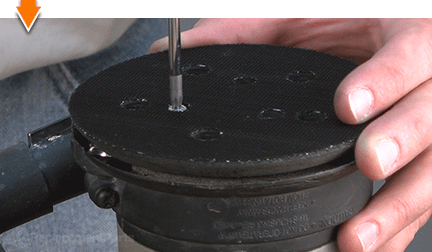
For easy alignment: pass a small screwdriver through one of the screw holes on the sander pad; then insert the end of the screwdriver into one of the holes on the pad support.

Install the sanding pad.

Secure the sander pad with the (3) screws.

Sanding can be a demanding task. But you don't have to rough-up your accountant to smooth-out your countertops. As you just learned, repairing your own power tools is simple when you follow our step-by-step guides. Not only did you expand sander functionality at a fraction of the cost of replacement; you have taken the edge off all future repairs.
Find your next fix here.