



How to Replace the Pump Hose on an Air Compressor
Finish Nailer Repair - Replacing the Driver Guide (Ridgid Part # 79004001022)

THE FACTS | THE FIX | THE FINISH
If leaking seals and service bills are distressing your compressor, it's time to face the fix. While air compressors can be as diverse as the individuals that use them, most models share some general characteristics and components. Whether you are inflating your tires or creating empires, eReplacementParts.com provides the parts, procedures and facts you need to fearlessly fix what fails you.
The pump hose carries air between the pump and the tank on an air compressor. Over time, this hose can become brittle and cracked. The result is a compressor that won’t stop running (as it works to compensate for the loss of pressure), or one that simply cannot build pressure at all.
Less than impressed with your compressor? Replacing the pump hose may be the solution. This article will show you how to complete the repair like an expert.
THE FACTS | THE FIX | THE FINISH
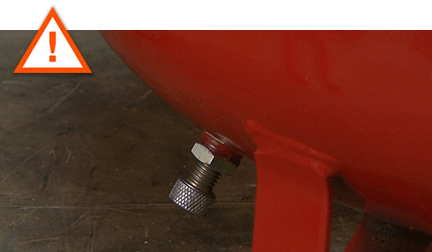
! DEPRESSURIZE THE AIR TANK.
Always depressurize the tank before servicing an air compressor. To do this, open the drain valve and wait until all of the air (and pressure) has escaped.
REMOVING THE PUMP HOSE [top]
1. Remove the manifold cover.
Remove the retaining screw.
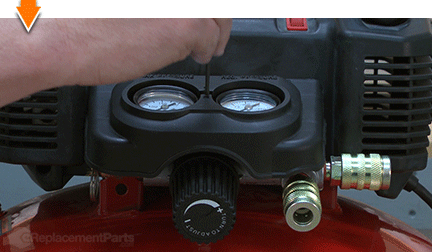
Lift the manifold cover away from the unit.
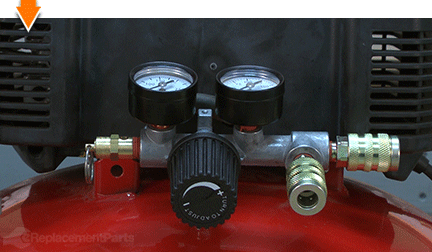
2. Remove the pump assembly from the tank.
Remove the front retaining screw.
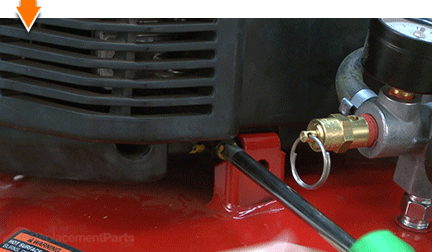
Remove the rear retaining screw.
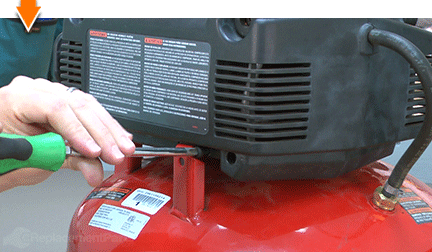
Slide the pump assembly to the side.
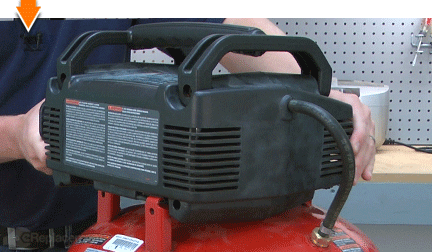
Lift the pump assembly away from the tank.
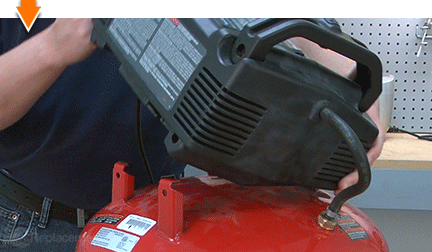
Position the pump assembly upon the isolator feet a flat work surface.

3. Remove the top handle.
Remove the two retaining screws.

Remove the top handle from the pump housing.
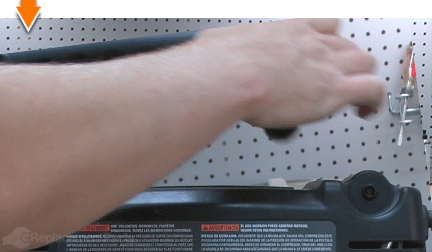
4. Remove the rear pump housing cover.
Remove the three retaining screws.

Remove the rear pump housing cover.
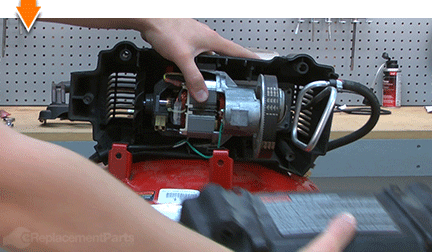
5. Remove the pump hose.
SPECIFIX: The crimp-style hose connectors used on most compressors are designed for one-time installation only. The following process will destroy these clamps, so be sure to order (or have on-hand) two additional hose connectors for this project.
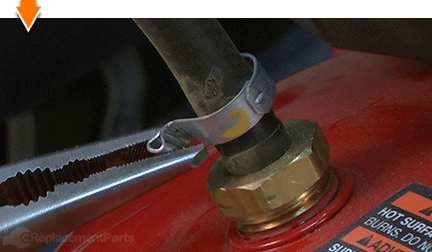
Use heavy-duty wire cutters to simultaneously cut and twist the protruding tabs of the top hose connector clamp until it releases.

Repeat the previous step to remove the lower hose connector clamp.

Disconnect the top portion of the pump hose from the outlet tube (use hose-puller pliers as necessary).

Disconnect the lower portion of the pump hose from the check valve inlet (use hose-puller pliers as necessary).

INSTALLING THE NEW PUMP HOSE [top]
6. Install the pump hose.
Slide two new connector clamps over the end of the pump hose.

Install the top portion of the new pump hose to the outlet tube.

Install the lower portion of the new pump hose onto the check valve.

Use end-nip pliers to crimp the sides of the top connector clamp (and secure the hose).

Repeat the previous step to secure the lower connector clamp and hose.

REASSEMBLING THE UNIT [top]
7. Reinstall the rear housing cover.
Install the rear portion of the pump housing.

Secure the housing cover with the three screws.

8. Reinstall the top handle.
Install the top handle to the pump housing.

Secure the top handle with the two screws.
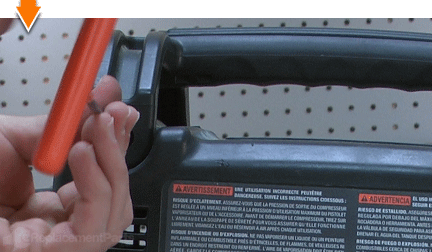
9. Reinstall the pump assembly.
Align the entire pump assembly with the compressor tank.

Slide the pump assembly into place upon the isolator feet.

Secure the pump to the tank with the rear mounting screw.

Secure the pump to the tank with the front mounting screw.
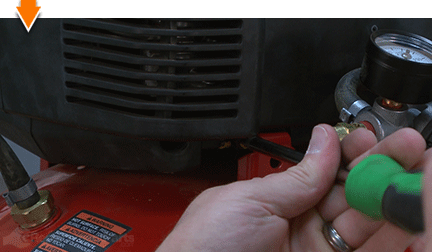
10. Reinstall the manifold cover.
Install the manifold cover.

Secure the manifold cover with the screw.

THE FACTS | THE FIX | THE FINISH
A well-maintained air compressor can mean the difference between performance under pressure, and under-pressured performance. But you don't have to empty your pockets to keep your air tank full. As you just learned, repairing your compressor is simpler than you think, especially when you follow our step-by-step guides. Not only did you refresh compression at a fraction of the cost of replacement; you have inflated your ability to fearlessly face the next fix, regardless of the pressure involved.
Find your next fix here.