




Woodworking: 7 Hand Tools to Get You Started
Getting started as a beginning woodworker can be a frustrating experience. Between trying to gain the skills necessary to tackle a project and creating a workspace with the necessary tools, it’s not always an easy hobby to get involved with. However, there is a starting place for everything, and woodworking is no different.
 Photo by recursion_see_recursion via Flickr
In this series of articles we’ll be helping all of you out there that want to get involved with woodworking, but may feel a little overwhelmed organizing everything. We’ll begin by giving you our in-house experts’ selection of the 7 basic hand tools that every handyman should have in his/her shop.
Let’s begin!
Hammer
Photo by www.homespothq.com via Flickr
We understand that most of you already have a hammer lying around your home. But that doesn’t change its importance for any woodshop. Whether it’s used for setting nails or removing them, the hammer can do it all and it’s a must-have for any functional workspace.
Keep in mind that you don’t have to overspend to get a good hammer—just search for a hammer that’s comfortable in your hands and has a good weight to it. A quality hammer shouldn’t set you back any further than $10.
Tape Measure
Photo by Mulad via Flickr
Unless you plan on estimating all of your measurements (do not do this), a tape measure is the staple of any handyman’s tool belt. A quality, retractable tape measure with both Standard and Metric markings should satisfy all of your needs.
Spending a couple extra bucks on a quality tape measure can pay off down the road as they take beating over the course of a year. Shop for a standard 25’ high-quality model and you’ll be good to go.
Hand Saw
Photo by KaCey97007 via Flickr
We’ll be the first to admit that hand saws are no match for powered saws, but they still do have their place in a workshop. And since this article is about hand tools, it just makes sense to include a tool that is capable of cutting through lumber.
Just about any hand saw should hold you over for a while, but a bow-saw is the best all-around saw to have in your shop. It can cut wood with the grain, across the grain and anywhere in between. You’ll be surprised how often a hand saw comes in handy. Take our word for it!
Utility Knife
Photo by www.homespothq.com via Flickr
A utility knife, sometimes referred to as a box cutter, is another important tool to store in your shop. It can be used for marking a piece of lumber, cleaning up excess silicone, scraping off dried glue, opening plastic packaging, or the numerous other occasions where a sharp blade is valuable.
Don’t be caught without one!
Level
Photo by www.homespothq.com via Flickr
Attempting to just “eye it”, isn’t always an effective way of determining if a piece of lumber is level. That’s why even the professionals stock a few different levels in their workshop. Long levels are best used for larger projects, as they can give you a more accurate reading than smaller versions. However, small levels can be easily equipped on your tool belt for use in the field.
We recommend purchasing a longer level, about 30”, to start. It’ll hold you over until you can upgrade to a digital level or to a different size.
Screwdriver Set
Photo by buba69 via Flickr
You have the means to drive nails with a hammer, now make sure you can fasten and remove screws by purchasing a good screwdriver set. At the very minimum, you’ll want to have a standard sized (#2) set of a Phillips-head and flat-head screwdrivers with a comfortable, ergonomic handle.
If you’d like to get a head start on purchasing a complete set of screwdrivers, we encourage you to do so. You’ll never know what your home or project could throw at you, and it’s smart to always be prepared.
Wrench Set
Photo by Chovee via Flickr
Lastly, you’ll need a tool that can handle fastening bolts and nuts. If you have the proper budget, we recommend purchasing a basic 5 piece open-end wrench set. These wrenches are a staple for any work area, and are necessary to the functionality of a well-organized woodshop.
These open-end wrench sets can be purchased from any local hardware store. We recommend initially obtaining standard sized wrenches, and then consider metric down the road.
Gathering up all of these tools will greatly aid your success within your workshop – but you’ll still be limited on the amount of projects you can successfully complete. The next step requires some modern, high-tech power tools, which we’ll be rolling out in our next woodworking article.
Did our selection of hand tools match your list? What did we miss on? Leave us a comment and let your voice be heard!
Photo by recursion_see_recursion via Flickr
In this series of articles we’ll be helping all of you out there that want to get involved with woodworking, but may feel a little overwhelmed organizing everything. We’ll begin by giving you our in-house experts’ selection of the 7 basic hand tools that every handyman should have in his/her shop.
Let’s begin!
Hammer
Photo by www.homespothq.com via Flickr
We understand that most of you already have a hammer lying around your home. But that doesn’t change its importance for any woodshop. Whether it’s used for setting nails or removing them, the hammer can do it all and it’s a must-have for any functional workspace.
Keep in mind that you don’t have to overspend to get a good hammer—just search for a hammer that’s comfortable in your hands and has a good weight to it. A quality hammer shouldn’t set you back any further than $10.
Tape Measure
Photo by Mulad via Flickr
Unless you plan on estimating all of your measurements (do not do this), a tape measure is the staple of any handyman’s tool belt. A quality, retractable tape measure with both Standard and Metric markings should satisfy all of your needs.
Spending a couple extra bucks on a quality tape measure can pay off down the road as they take beating over the course of a year. Shop for a standard 25’ high-quality model and you’ll be good to go.
Hand Saw
Photo by KaCey97007 via Flickr
We’ll be the first to admit that hand saws are no match for powered saws, but they still do have their place in a workshop. And since this article is about hand tools, it just makes sense to include a tool that is capable of cutting through lumber.
Just about any hand saw should hold you over for a while, but a bow-saw is the best all-around saw to have in your shop. It can cut wood with the grain, across the grain and anywhere in between. You’ll be surprised how often a hand saw comes in handy. Take our word for it!
Utility Knife
Photo by www.homespothq.com via Flickr
A utility knife, sometimes referred to as a box cutter, is another important tool to store in your shop. It can be used for marking a piece of lumber, cleaning up excess silicone, scraping off dried glue, opening plastic packaging, or the numerous other occasions where a sharp blade is valuable.
Don’t be caught without one!
Level
Photo by www.homespothq.com via Flickr
Attempting to just “eye it”, isn’t always an effective way of determining if a piece of lumber is level. That’s why even the professionals stock a few different levels in their workshop. Long levels are best used for larger projects, as they can give you a more accurate reading than smaller versions. However, small levels can be easily equipped on your tool belt for use in the field.
We recommend purchasing a longer level, about 30”, to start. It’ll hold you over until you can upgrade to a digital level or to a different size.
Screwdriver Set
Photo by buba69 via Flickr
You have the means to drive nails with a hammer, now make sure you can fasten and remove screws by purchasing a good screwdriver set. At the very minimum, you’ll want to have a standard sized (#2) set of a Phillips-head and flat-head screwdrivers with a comfortable, ergonomic handle.
If you’d like to get a head start on purchasing a complete set of screwdrivers, we encourage you to do so. You’ll never know what your home or project could throw at you, and it’s smart to always be prepared.
Wrench Set
Photo by Chovee via Flickr
Lastly, you’ll need a tool that can handle fastening bolts and nuts. If you have the proper budget, we recommend purchasing a basic 5 piece open-end wrench set. These wrenches are a staple for any work area, and are necessary to the functionality of a well-organized woodshop.
These open-end wrench sets can be purchased from any local hardware store. We recommend initially obtaining standard sized wrenches, and then consider metric down the road.
Gathering up all of these tools will greatly aid your success within your workshop – but you’ll still be limited on the amount of projects you can successfully complete. The next step requires some modern, high-tech power tools, which we’ll be rolling out in our next woodworking article.
Did our selection of hand tools match your list? What did we miss on? Leave us a comment and let your voice be heard!
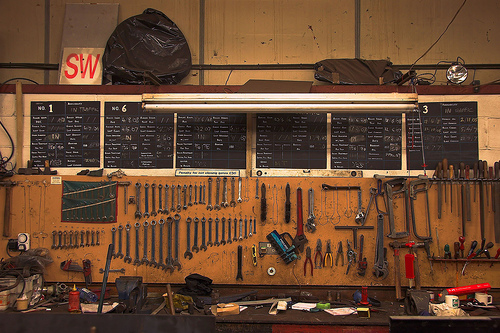 Photo by recursion_see_recursion via Flickr
In this series of articles we’ll be helping all of you out there that want to get involved with woodworking, but may feel a little overwhelmed organizing everything. We’ll begin by giving you our in-house experts’ selection of the 7 basic hand tools that every handyman should have in his/her shop.
Let’s begin!
Hammer
Photo by recursion_see_recursion via Flickr
In this series of articles we’ll be helping all of you out there that want to get involved with woodworking, but may feel a little overwhelmed organizing everything. We’ll begin by giving you our in-house experts’ selection of the 7 basic hand tools that every handyman should have in his/her shop.
Let’s begin!
Hammer
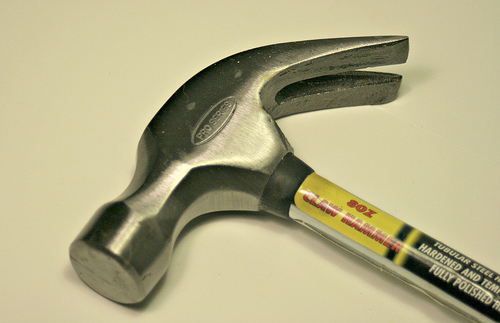 Photo by www.homespothq.com via Flickr
We understand that most of you already have a hammer lying around your home. But that doesn’t change its importance for any woodshop. Whether it’s used for setting nails or removing them, the hammer can do it all and it’s a must-have for any functional workspace.
Keep in mind that you don’t have to overspend to get a good hammer—just search for a hammer that’s comfortable in your hands and has a good weight to it. A quality hammer shouldn’t set you back any further than $10.
Tape Measure
Photo by www.homespothq.com via Flickr
We understand that most of you already have a hammer lying around your home. But that doesn’t change its importance for any woodshop. Whether it’s used for setting nails or removing them, the hammer can do it all and it’s a must-have for any functional workspace.
Keep in mind that you don’t have to overspend to get a good hammer—just search for a hammer that’s comfortable in your hands and has a good weight to it. A quality hammer shouldn’t set you back any further than $10.
Tape Measure
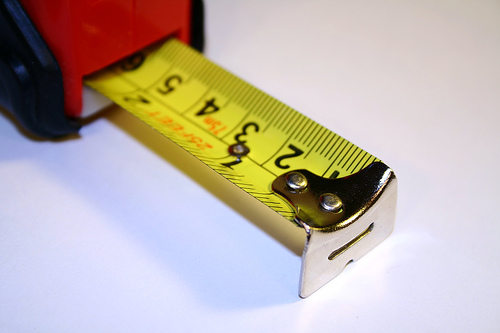 Photo by Mulad via Flickr
Unless you plan on estimating all of your measurements (do not do this), a tape measure is the staple of any handyman’s tool belt. A quality, retractable tape measure with both Standard and Metric markings should satisfy all of your needs.
Spending a couple extra bucks on a quality tape measure can pay off down the road as they take beating over the course of a year. Shop for a standard 25’ high-quality model and you’ll be good to go.
Hand Saw
Photo by Mulad via Flickr
Unless you plan on estimating all of your measurements (do not do this), a tape measure is the staple of any handyman’s tool belt. A quality, retractable tape measure with both Standard and Metric markings should satisfy all of your needs.
Spending a couple extra bucks on a quality tape measure can pay off down the road as they take beating over the course of a year. Shop for a standard 25’ high-quality model and you’ll be good to go.
Hand Saw
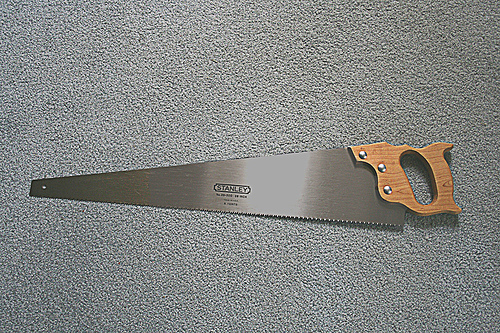 Photo by KaCey97007 via Flickr
We’ll be the first to admit that hand saws are no match for powered saws, but they still do have their place in a workshop. And since this article is about hand tools, it just makes sense to include a tool that is capable of cutting through lumber.
Just about any hand saw should hold you over for a while, but a bow-saw is the best all-around saw to have in your shop. It can cut wood with the grain, across the grain and anywhere in between. You’ll be surprised how often a hand saw comes in handy. Take our word for it!
Utility Knife
Photo by KaCey97007 via Flickr
We’ll be the first to admit that hand saws are no match for powered saws, but they still do have their place in a workshop. And since this article is about hand tools, it just makes sense to include a tool that is capable of cutting through lumber.
Just about any hand saw should hold you over for a while, but a bow-saw is the best all-around saw to have in your shop. It can cut wood with the grain, across the grain and anywhere in between. You’ll be surprised how often a hand saw comes in handy. Take our word for it!
Utility Knife
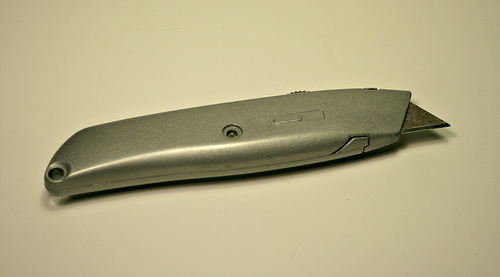 Photo by www.homespothq.com via Flickr
A utility knife, sometimes referred to as a box cutter, is another important tool to store in your shop. It can be used for marking a piece of lumber, cleaning up excess silicone, scraping off dried glue, opening plastic packaging, or the numerous other occasions where a sharp blade is valuable.
Don’t be caught without one!
Level
Photo by www.homespothq.com via Flickr
A utility knife, sometimes referred to as a box cutter, is another important tool to store in your shop. It can be used for marking a piece of lumber, cleaning up excess silicone, scraping off dried glue, opening plastic packaging, or the numerous other occasions where a sharp blade is valuable.
Don’t be caught without one!
Level
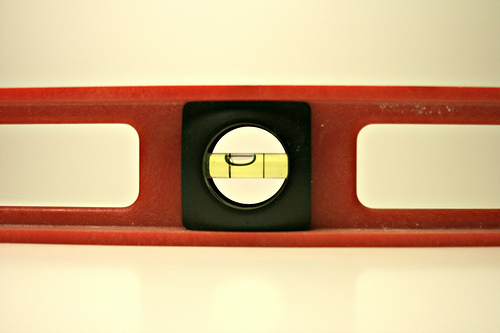 Photo by www.homespothq.com via Flickr
Attempting to just “eye it”, isn’t always an effective way of determining if a piece of lumber is level. That’s why even the professionals stock a few different levels in their workshop. Long levels are best used for larger projects, as they can give you a more accurate reading than smaller versions. However, small levels can be easily equipped on your tool belt for use in the field.
We recommend purchasing a longer level, about 30”, to start. It’ll hold you over until you can upgrade to a digital level or to a different size.
Screwdriver Set
Photo by www.homespothq.com via Flickr
Attempting to just “eye it”, isn’t always an effective way of determining if a piece of lumber is level. That’s why even the professionals stock a few different levels in their workshop. Long levels are best used for larger projects, as they can give you a more accurate reading than smaller versions. However, small levels can be easily equipped on your tool belt for use in the field.
We recommend purchasing a longer level, about 30”, to start. It’ll hold you over until you can upgrade to a digital level or to a different size.
Screwdriver Set
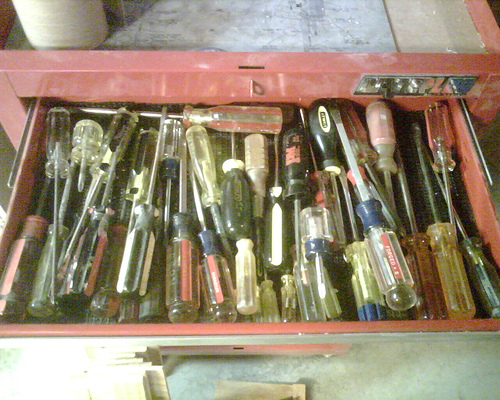 Photo by buba69 via Flickr
You have the means to drive nails with a hammer, now make sure you can fasten and remove screws by purchasing a good screwdriver set. At the very minimum, you’ll want to have a standard sized (#2) set of a Phillips-head and flat-head screwdrivers with a comfortable, ergonomic handle.
If you’d like to get a head start on purchasing a complete set of screwdrivers, we encourage you to do so. You’ll never know what your home or project could throw at you, and it’s smart to always be prepared.
Wrench Set
Photo by buba69 via Flickr
You have the means to drive nails with a hammer, now make sure you can fasten and remove screws by purchasing a good screwdriver set. At the very minimum, you’ll want to have a standard sized (#2) set of a Phillips-head and flat-head screwdrivers with a comfortable, ergonomic handle.
If you’d like to get a head start on purchasing a complete set of screwdrivers, we encourage you to do so. You’ll never know what your home or project could throw at you, and it’s smart to always be prepared.
Wrench Set
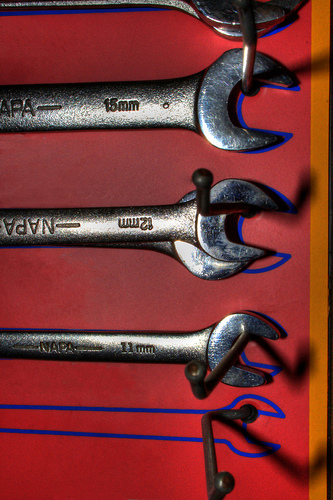 Photo by Chovee via Flickr
Lastly, you’ll need a tool that can handle fastening bolts and nuts. If you have the proper budget, we recommend purchasing a basic 5 piece open-end wrench set. These wrenches are a staple for any work area, and are necessary to the functionality of a well-organized woodshop.
These open-end wrench sets can be purchased from any local hardware store. We recommend initially obtaining standard sized wrenches, and then consider metric down the road.
Gathering up all of these tools will greatly aid your success within your workshop – but you’ll still be limited on the amount of projects you can successfully complete. The next step requires some modern, high-tech power tools, which we’ll be rolling out in our next woodworking article.
Did our selection of hand tools match your list? What did we miss on? Leave us a comment and let your voice be heard!
Photo by Chovee via Flickr
Lastly, you’ll need a tool that can handle fastening bolts and nuts. If you have the proper budget, we recommend purchasing a basic 5 piece open-end wrench set. These wrenches are a staple for any work area, and are necessary to the functionality of a well-organized woodshop.
These open-end wrench sets can be purchased from any local hardware store. We recommend initially obtaining standard sized wrenches, and then consider metric down the road.
Gathering up all of these tools will greatly aid your success within your workshop – but you’ll still be limited on the amount of projects you can successfully complete. The next step requires some modern, high-tech power tools, which we’ll be rolling out in our next woodworking article.
Did our selection of hand tools match your list? What did we miss on? Leave us a comment and let your voice be heard!

WRITTEN BY
EREPLACE CONTENT TEAM
Comprised of creative, experienced video producers, writers, and graphic designers, the eReplacementParts.com Content Team is focused on using their diverse knowledge base to create high-quality informative content to achieve our simple mission: Help the world fix things. Whether it be through tips, guides, or hacks, we ensure that every piece of content includes only expert knowledge, to guarantee that you can do the job right the first time!
PUBLISHED ON
October 02, 2013