




Plywood: The (Mostly) Good and the Bad
 mega ramp used in the X-Games (imagine constructing that with oak). Basically, its a contractor's dream material. Take a look at the entire article here.
 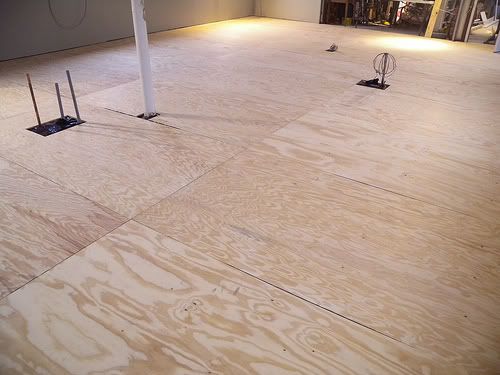 One of the many uses for plywood. --Photo by mtneer_man via Flickr
And yes ladies and gentlemen, there is more. I listed a few of my own disadvantages and advantages below.
Advantages:
One of the many uses for plywood. --Photo by mtneer_man via Flickr
And yes ladies and gentlemen, there is more. I listed a few of my own disadvantages and advantages below.
Advantages:
Weight: A regular 4x8 sheet of plywood is much lighter compared to other types of wood. This is due to the layers of particle board that compose the sheet to give it ridgitity. Less weight means less stress on the flooring, siding, or whatever application you may use it for.
Pliability: Plywood can be bent or shaped much easier than other materials. It has the ability to maintain its strength while bending without splitting or warping.
Various sizes: The standard size of a sheet of plywood is 4 feet wide by 8 feet long with a 1/2 inch thickness. And the sizes expand larger and smaller from there. Most hardware stores will be able to find you a sheet in the exact dimensions that you are looking for.
Disadvantages:Weather: One of the downfalls with plywood is its susceptibility to accumulate moisture and become weathered. This is, of course, unless you buy plywood specifically rated for outdoor use.
Appearance: You obviously won't use plywood to finish your kitchen cabinets. It's rather ugly, and traditionally only meant to provide structure and stability to your projects.
Can't be milled: Since plywood is made using layers of particle-board and wood, you can't mill it for a thinner cut. However, the different sizes and thicknesses offered at the store should solve this issue.
In the end, I'm grabbing at straws trying to find any flaws with plywood here. As long as you do a bit of research before shopping for materials, you will have no problem finding the correct piece of plywood for your next job. Now go grab a couple sheets of plywood and start working on that project.
WRITTEN BY
EREPLACE CONTENT TEAM
Comprised of creative, experienced video producers, writers, and graphic designers, the eReplacementParts.com Content Team is focused on using their diverse knowledge base to create high-quality informative content to achieve our simple mission: Help the world fix things. Whether it be through tips, guides, or hacks, we ensure that every piece of content includes only expert knowledge, to guarantee that you can do the job right the first time!