
Quick Fix: How to Replace the Platen on a Belt Sander
Replacing the platen on a belt sander is a straightforward repair, but getting the fasteners back in place can be tricky. Read this article to learn a handy trick to make re-installing the platen easi...
Electric Power Tool Parts 101
This article defines the basic parts of most power tools, explains how they work, and what to look for when they stop working.
Discussion
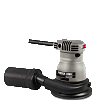
Discussion for the Porter Cable 333 TYPE 1 Random Orbit Palm Sander
I need the "clutch belt" from your video. Is this the correct belt? You should Identify on video what part number you are referring to help us buy correct part. thanks
You are correct. Part number 903373 is the part that is used in the video. Thank you for your suggestion on mentioning part numbers in the videos. I will pass it on.
I was cleaning my sander that the belt is very loose. This causes the pad to spin very fast. I want to replace the belt but I'm wondering if the bearing should be free to spin?
If your pad is spinning at a high rate of speed you are correct in replacing the 903373 belt. If the bearing, part number 965119SV, in the pad support is hard to turn or is rough when it turns, now is a great time to replace it.
I have a 333 type 3 that the random orbit belt ( #37, part number 903373) broke. I purchased a new one from you and installed it on my sander. It was very tight and I had to stretch it to get it on. It is so tight that it prevents the shaft from turning. Am I doing something wrong?
The disk that holds my sandpaper has torn and it will not hold paper. I have tried to find out how to repair it. Do I need to buy a new sander? I hope not. Thanks for your help.
When I run the sander it will seize up and I get a faint smell from it. I have tried cleaning it, checked the brushes, placed a drop of oil on bearings. After it sets for a while it will start up, but stop after less than a minute. Could the armature be heating up or are the bearings wearing out?
In your opinion, which is best: the hook & loop type or the adhesive type pad? My experience has been the hook & loop type seems to become ineffective in holding the discs fairly quickly. Is there a special way of handling the pad or is the adhesive type better? I would appreciate your (unbiased) opinion before I place my order. My hook & loop pad isn't working anymore.
Thanks!
Never leave the pad without a piece of sandpaper on it - this will protect the hooks. Also, never use the sander without sandpaper on it. Finally, the pads wear out every so often. You can buy replacement pads at Home Depot. Or right here.
The hook and loop are the best I think. You can change papers and change back if the one you removed isn't worn out. Sandpaper discs are expensive.
I had a small circular piece of what looked like a rubber washer about 3" in diameter fall out of the bottom of the pad. It resembled a rubber band or hair scrunchie. Then the foam piece, #125, came out. I can glue the foam piece back in but I do not see where the rubber piece came from. I am assuming this piece should be replaced for performance. Can you help me?
The piece that came out is item #37, the clutch belt. It keeps the pad from spinning out of control when you lift the sander from the workpiece. It wraps around item #103 and the small pulley on the edge of the sander, item #37B. The clutch belt is part #903373 and is available from http://www.ereplacementparts.com .
My motor spins at high RPM, but the pad only rotates if it is held off of the wood. No bearings are seized. The orbit belt (11A) shows heavy wear in one spot. Is this just a problem with 11A? The pad support (103) spins free, independent of #91, which seems to rotate 1-1 with the motor.
I have a Porter Cable random orbital sander Model #332. The pad needs to be replaced. Can I change the pad to a hook and loop type instead of the adhesive back pad thats currently on it? Will it fit? If so, what is the correct part # and replacement disc's #. Thanks
I replaced the belt on my 333 random orbital sander and it still runs at very high speed and throws the sanding disc off. There seems to be no kick down to a lower speed.
Check the pad bearing, Item #11A. It may be seized, causing the sander to spin continuously. It is part #803854 and is available from http://www.ereplacementparts.com.
The Type Number is used by the manufacture to indicate that a change was made to the tool in manufacturing. The Type Number will be listed on the same tag as the model and serial number information. If no type number is listed then you are usually safe to assume that your tool is the earliest Type number, usually either Type 0 or Type 1.
All versions of the 333 use the clutch belt and pulley.
I hope that this helps with ordering the correct parts for your repair!
Try replacing the bearings, the random orbit belt, the rubber spacers inside the housing that hold the field firmly in place and check the aluminum housing that holds the bottom bearing. This sometimes gets worn inside allowing for a sloppy fit for the bearing. I hope this helps.
My porter cable 333 sander quit working thought it was the switch so changed that but that was not the problem the brushes look good and there are no loose wires any thoughts what the problem might be
I own a custom cabinet shop and have had this same problem over & over again. Break the sander down & check the middle bearing for seizing. I have come to this conclusion, if the sander is used for long periods at a time the bearing heats up. The grease inside the (sealed) bearing thins and seeps out. The bearing seizes so tightly a person would think it is an electrical failure. I made a tool that works along with a press to remove the bearing from shaft. You can then replace it or do as I do 75% of the time. Remove seals from the bearing, clean the bearing with lacquer thinner, repack with a good quality grease and re-insert the seals. Then press the bearing onto the shaft and assemble the sander. If you need to sand for long periods of time purchase another sander to use while the other is cooling down.
There are two likely causes. First, the clutch belt, item #37, may have broken. I have seen this belt break and then roll itself up into a ball between the pad and the underside of the sander. Basically acting like a brake.
The second item would be a bad pad bearing, item #11A. A bad bearing will put a great amount of load on your sander and cause it to slow down and act erratic.
My sander has started to generate what sounds like a dry bearing noise. I cleaned the fan and removed a bunch of packed dust. The motor runs fine. I suspect orbital bearing to be out of lubrication rather than the motor. Is it likely the lower bearing will fail first before the upper and lower motor bearing?
There are 3 bearings in your sander. Although they are "shielded" bearings, they are not airtight. If you disassemble the sander, clean around the bearings, add a little fine oil and spin them by hand and they should loosen up. Also I have let the assembly sit overnight to let the oil soak into the bearing. The bottom is held by a retaining ring and the two smaller ones are a light press fit.
Hi Sonny. The dust collector on your 333 sander definitely shouldn't be popping off from air pressure! Sounds like the press-fit seal that holds the collector in place is failing or broken. I would suspect that the collector adapter is faulty and needs to be replaced. Here's a link:
Sonny, There are two small 'O' rings that hold the dust collector on firmly. They tend to come off when emptying the dust and if one is not watching the 'O' rings come and you do not notice it. They fit on the neck of the sander.
I've put three replacement pads on my 333 Type four so far. They don't seem to hold up well. Is there somthing I can do to clean it etc, so the sandpaper doesn't fly off?
Hook & Loop sanding pads offer many benefits to the woodworker. They offer the ability to change sanding grits quickly. The user may remove and then reattach a sandpaper disc allowing for maximum use and reducing the cost of sandpaper.
The Hook & Loop sandpaper system consists of a sanding pad with fine plastic hooks, which is attached to the sander, and sandpaper discs, which have a looped fabric backing. The loops on the fabric backing are held by the hooks on the sanding pad.
Hook & Loop sanding pads will last through several hundred sandpaper discs with proper use. The most common cause of a Hook & Loop pad to wear out prematurely is excessive pressure being applied to the sanding pad. Only enough pressure should be applied to the sander to keep it on the workpiece and to guide the sander in the desired sanding pattern. Excessive pressure creates heat build up in the sanding pad which will quickly damage or even melt the tiny plastic hooks. Once the hooks are damaged they will no longer hold the fabric backing on the sandpaper effectively and the pad will need to be replaced. When excessive pressure is applied it slows or even stops the random action of the sander causing a large increase in swirl marks left on the workpiece.
Best results and fastest sanding will be achieved by using light sanding pressure and a proper selection of sandpaper grits. Start with the coarsest grit needed to quickly remove any rough wood surfaces or uneven glue joints. Once the surface has been smoothed and leveled you can move through the sanding grits to the desired finish. Never skip more than one sanding grit at a time. Skipping grits requires additional time and effort to remove the scratches left by the previous grit. The finest grit needed depends on the type of finish the project will receive. If a film finish, such as polyurethane or lacquer is to be used then 180 or 220 grit will be sufficient. Film finishes can have problems adhering to surfaces sanded finer than 220 grit. If the project is to receive an oil finish then a 400 or even 600 grit finish may be desired.
The belt for the random orbit feature broke. I have a new one but do not know where to put it. I put it on the pad support and on part 37B, but that does not appear to be correct.
Do you have a schematic better that the exploded parts list above?
The clutch belt goes between the fixed pulley, #37b on the parts diagram, and the pad support, #103 on the parts diagram. To install, remove the sanding pad. Remove the old belt or any pieces of if that may be caught in the mechanism. Loop the belt around the fixed pulley. Now wrap the other half around the pad support. Reinstall the sanding pad.
I am having a problem with my Orbital Sander model 333. When I start it up it will come up to speed for about 20 seconds then gradually slow down to a stop. I have checked the brushes and they are fine, blown out the sawdust from inside, cleaned the armature and checked the wiring. Any ideas.
Motor runs fine, pad spins rapidly if held in the air, but stops spinning with even a tiny amount of resistance. Fan (#91) spins fast, 1-1 with the motor. Right before failure the pad seemed to be slowing down, and the tool ran louder than usual, vibration seemed to increase a bit. The random orbit belt is ok, and none of the bearings are seized. What part drives the spinning of the pad? I can't seem to find any parts that look damaged.
it still sounds like the bearing under the pad is . take the pad off , where the belt rides the idler pully look 4 a deep groove . if it has 1 loose the screw and turn the idler 180.
Reply: PC 333 Sander Won't Spin
tlendway
No groove in the idler pulley. Completely disassembled the unit, found 3 working bearings, can't find any more. Can't figure out how this thing is supposed to work - what makes the pad spin at a different RPM than the motor? What could be broken to cause the pad to stop spinning?
Reply: PC 333 Sander Won't Spin
DoctorD
the lower bearing , belt, pully. if the belt is not tight it will slip.but the lower bearing on your finger , and spin it . if go' s more then 2 times replce it
Reply: PC 333 Sander Won't Spin
tlendway
Ok if I spin the lower bearing (the one that's essentially inside of the pad support piece), the pad support turns less than 360 degrees (I haven't bothered to disassemble the bearing from the pad, that ring will be hard to remove). So there's a bit of friction there, but it does not feel like it's grinding. Sorry I'm a bit of an idiot when it comes to this stuff - is this bearing supposed to spin more easily than this?
Reply: PC 333 Sander Won't Spin
DoctorD
i still think the bearing is the problem. i do 5 or 6 of those sander s a week
Hook and loop pad wears out. Won't hold paper. This will be the third time I've had to replace. Thinking of switching to a "stick on" pad. Can the hook and loop pad be cleaned? Or should I junk it?
Hook & Loop pads offer the benefit of being able to quickly change sandpaper and being able to reuse sandpaper which offers quite a cost savings. The down side to H&L paper is that the pads do have a shorter service life than PSA (adhesive backed) pads. A H&L pad should last through several hundred pieces of sandpaper.
A H&L pad is covered with thousands of tiny plastic hooks that grip the sand paper. The most common reason for a H&L pad to wear out prematurely is applying downward pressure to the sanding pad while operating the sander. When downward pressure is applied it creates heat within the sanding pad. It doesn't take much heat to cause the tiny hooks on the pad to deform or melt off all together. Another side effect of downward pressure on a random orbital sander is the increase of swirl marks left on the work piece. When excessive pressure is applied the random function, the ability of the pad to rotate while oscillating, is greatly reduced or even stopped.
Best results with a random orbit sander will be achieved when the sander is held lightly, just enough force to control it and move it in the desired sanding pattern. Using the correct schedule of sandpaper will greatly reduce the amount of time needed to finish the sanding on your project. If your project has some very rough wood or if you need to level joints or patches start with a course paper such as a 40 or 60 grit. Once everything has been initially smoothed and leveled then work up through the grits to your desired final finish, never skipping more than one grit. Skipping more than one grit at a time will greatly increase the time and effort to remove the scratches from the previous grit. If you are applying a film finish to your project such as polyurethane or lacquer it won't be necessary to sand beyond 180 or 220 grit. In fact film finishes have a hard time adhering to very hard woods like maple or hickory if the surface has been sanded beyond 220 grit. For an oil finish you may want to sand to 400 or even 600 grit.
We offer both H&L and PSA pads for your Porter Cable 333 sander here at ereplacementparts.com.
I have a 15 year old PC 333random orbital sander. recently the cover (I guess that is what the skirt that covers the pad at the bottom is called) at the bottom has begun rotating when the sander is on, winding the power cord about the sander. The belt appears to be intact, but I wonder if it is too slack. I replaced it once about six years ago.
Should I replace the belt? Or is it another problem?
Hey Rob,
You may have a bearing problem..if the pad support bearing locks up it will cause a lot of problems..part# 865119 also the fixed pulley probably has some wear and will need to be rotated or replaced #878884
hope this helps..?
cmoorejack
Porter Cable 333 TYPE 1 Random Orbit Palm Sander which has been good to me needs repair. The random speed doesn't work. When turned on the machine will go waaay to fast with no control. I'm wondering if this would be a belt that needs to be replaced? anyone had this happen
I think you're right about the belt. When the random orbit belt on those 333 sanders breaks it will cause the RPMs to go up and the pad moves differently. You'll need to remove the sander pad to replace the belt. The "belt" is really just a clear ring and periodically you'll need to replace it. It's Porter-Cable part #903373 and it can be purchased here:
the sander stopped oscilating. I noticed the plate would just spin (as it burned the finish on one of my instruments :o). I opened the sander and noticed the belt that gets the oscilating action going was gone. I purchased one and replaced it on the unit.
When I turn the unit on, the sander vibrates but it does not spin or oscilate anymore.
What could be the reason? I've checked and rechecked re assembly and its according to diagram. Any ideas?:confused:
Hey riverrainstuments,
Most likely it is the bearing # 20 part # 865119 that is locked up..it is located in the pad support..also check your fixed pulley for wear.#37b .. you can sometimes loosen the screw and then rotate the support for a simple fix..but it sounds like that bearing is the culprit..parts avail at ereplacementparts.com
hope this helps:)
Craig
Hi great video! In fact I didn't even know my belt was missing. But your video calls this belt a "clutch belt" while on the parts list, I can't find it. One listed is called "main drive" or something like that which gives me pause..... Can you provide me with the correct part number for this clutch belt?
Ordering parts to freshen up my over worked palm sander.
Parts lists showed this model in type 1 - 5?
Just thought it was model #333, can anyone please tell me what the
difference is between the 5 "types"?
The exploded parts diagrams look the same to me?:confused:
I have had several different sanders in my life time until I purchased the model 333 Porter Cable. This sander by far out preformed the rest. The first time I purchased one we owned a wood cabin cruiser. The way it removed the paint was effortless. Thank you for this sander.
The tool was loud and vibrated when new. After producing several kitchens of cabinets the lower plastic housing now vibrates on the motor frame, the tool is louder than ever, and has used several belts. The hook / loop pad is all but worn out. There must be something better? Incidentally, when tweeked up it does a good sanding job on flat surfaces which is why I have tolerated using it. On the positive side the motor and orbiting assembly are as tight as new. I'm trying a Bosch next.
Inside the housing are 2 plastic studs on either side of the field with a rubber spacer slipped on it. These are supposed to hold the motor firmly in place. These spacers get worn and smashed down allowing the motor to vibrate very roughly to the point of hurting your hand. Try replacing the spacers, make sure motor is snug inside the housing. I had the same problem with a new sander. Although Bosch is a good sander I keep coming back to Porter Cable.