Quick Fix: How to Replace the Platen on a Belt Sander
Replacing the platen on a belt sander is a straightforward repair, but getting the fasteners back in place can be tricky. Read this article to learn a handy trick to make re-installing the platen easi...
Power Tool Care and Maintenance 101
This article suggests guidelines for power tool care and maintenance. It also describes information tools available at eReplacementParts.com.
My Makita bo5010 sander goes into a circular spin when I put it on the surface that I want to sand. It never used to do this. What might I do to prevent the sander from spinning?
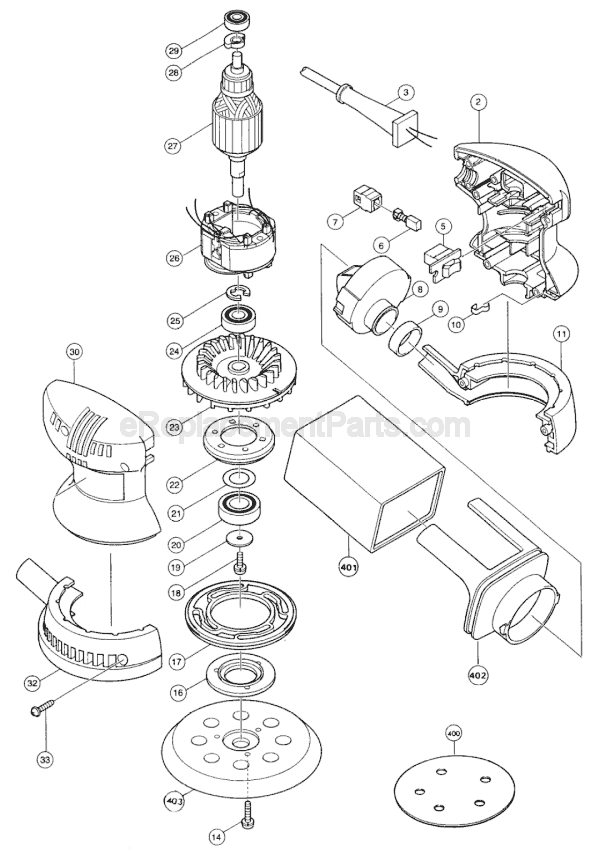
My sander just started doing this also. When I tore it apart I found that the lower bearing had frozen up and the brake ring is shot. These are items 17 & 20 on the parts diagram. They are easy to get to, just remove the three screws on the hook pad and remove. Then remove the brake ring (just snaps in). Remove the screw & washer holding on the bearing.
many hours of hard use on this sander. When I go to lower sander onto wood It grabs the wood and digs into wood. I almost ruined a veneer walnut door when i went to sand the surface and the sander grabbed and gouged the wood. Went through the thin layer of walnut before i could gain control of the sander. Never used to do this. Any ideas?
I need a dust bag for my BO5010 sander. I see the bag here on the parts page but I don't understand what other parts I need to install it. Ring? Nozzle? Belts?
The 403A is the pad to use with the Hook & Loop, or Velcro type paper. The 403B uses PSA paper. That is the type that sticks on to the pad with adhesive.
It sounds like the brake ring on your sander has gone out. The brake ring acts like a clutch to control the pad speed when there is no load. When it wears out your sander will spin out of control. The brake ring is part # 421866-9 and is available from http://www.ereplacementparts.com.
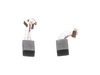
I need to replace the brushes on my Makita orbital sander. I have no problem taking the thing apart and seeing them, but does anyone have any tips on getting them in correctly? I just replaced the switch that was broken and I think I messed up the brushes trying to get them out of the way to put the sander back together, because it goes on now but just hums without spinning. It's old enough that they probably needed to be replaced anyway, but it seems a rather delicate operation, and I would like to not mess them up again trying to get them in.
Could it be that your brushes have reached the end of their service life?
Reply: Makita Sander BO5010 Will Not Ru...
Dag Krauzog
Hi,
I replaced brushes. No change.
Thank you for responding.
Dag
Reply: Makita Sander BO5010 Will Not Ru...
Dale
Dag. Your problem is the lower bearing behind the sander pad. Its froze up. part # 211236-8. Its # 20 on the diagram. When you raise the tool its spinning on the armature bearings. when you place it on your project. It stops the tool because the pad can no longer spin. hope this helps. Trust me its the problem. They have Seven in stock at eReplacement.
Same issues as with the other customer, Hook pad short life, bad switch, etc. Came to site to look for replacement pad, and now must decide if it is worth it.
I had the same problem with the hook and loop, but switched to adhesive and have had good luck. I think it was worth the 25 or so bucks. I did just recently have a bearing go out, but found another one at a bearing store in my town for $8. Beats spending another $80 for a new sander. Why they keep making hook and loop sander pads I will never know, they are crap.
Reply: Makita - BO5010 5010 Repairs
Mark
Hook & Loop sanding pads offer many benefits to the woodworker. They offer the ability to change sanding grits quickly. The user may remove and then reattach a sandpaper disc allowing for maximum use and reducing the cost of sandpaper.
The Hook & Loop sandpaper system consists of a sanding pad with fine plastic hooks, which is attached to the sander, and sandpaper discs, which have a looped fabric backing. The loops on the fabric backing are held by the hooks on the sanding pad.
Hook & Loop sanding pads will last through many hundreds of sandpaper discs with proper use. The most common cause of a Hook & Loop pad to wear out prematurely is excessive pressure being applied to the sanding pad. Only enough pressure should be applied to the sander to keep it on the workpiece and to guide the sander in the desired sanding pattern. Excessive pressure creates heat build up in the sanding pad which will quickly damage or even melt the tiny plastic hooks. Once the hooks are damaged they will no longer hold the fabric backing on the sandpaper effectively and the pad will need to be replaced. When excessive pressure is applied it slows or even stops the random action of the sander causing a large increase in swirl marks left on the workpiece.
Best results and fastest sanding will be achieved by using light sanding pressure and a proper selection of sandpaper grits. Start with the coarsest grit needed to quickly remove any rough wood surfaces or uneven glue joints. Once the surface has been smoothed and leveled you can move through the sanding grits to the desired finish. Never skip more than one sanding grit at a time. Skipping grits requires additional time and effort to remove the scratches left by the previous grit. The finest grit needed depends on the type of finish the project will receive. If a film finish, such as polyurethane or lacquer is to be used then 180 or 220 grit will be sufficient. Film finishes can have problems adhering to surfaces sanded finer than 220 grit. If the project is to receive an oil finish then a 400 or even 600 grit finish may be desired.
Reply: Makita - BO5010 5010 Repairs
Mark
Hook & Loop sanding pads offer many benefits to the woodworker. They offer the ability to change sanding grits quickly. The user may remove and then reattach a sandpaper disc allowing for maximum use and reducing the cost of sandpaper.
The Hook & Loop sandpaper system consists of a sanding pad with fine plastic hooks, which is attached to the sander, and sandpaper discs, which have a looped fabric backing. The loops on the fabric backing are held by the hooks on the sanding pad.
Hook & Loop sanding pads will last through many hundreds of sandpaper discs with proper use. The most common cause of a Hook & Loop pad to wear out prematurely is excessive pressure being applied to the sanding pad. Only enough pressure should be applied to the sander to keep it on the workpiece and to guide the sander in the desired sanding pattern. Excessive pressure creates heat build up in the sanding pad which will quickly damage or even melt the tiny plastic hooks. Once the hooks are damaged they will no longer hold the fabric backing on the sandpaper effectively and the pad will need to be replaced. When excessive pressure is applied it slows or even stops the random action of the sander causing a large increase in swirl marks left on the workpiece.
Best results and fastest sanding will be achieved by using light sanding pressure and a proper selection of sandpaper grits. Start with the coarsest grit needed to quickly remove any rough wood surfaces or uneven glue joints. Once the surface has been smoothed and leveled you can move through the sanding grits to the desired finish. Never skip more than one sanding grit at a time. Skipping grits requires additional time and effort to remove the scratches left by the previous grit. The finest grit needed depends on the type of finish the project will receive. If a film finish, such as polyurethane or lacquer is to be used then 180 or 220 grit will be sufficient. Film finishes can have problems adhering to surfaces sanded finer than 220 grit. If the project is to receive an oil finish then a 400 or even 600 grit finish may be desired.
It sounds like you have my sander.
I have the same issue(s) with my 5010
I came to this site to look for parts and now I wonder if I might just trash it and go for a new something else.
Reply: Makita - BO5010
Gary
Mark's reply makes sense to me. I used my 5010 for a few dozen hours and I often pressed hard on difficult spots. When my hook and loop pad gave out yesterday, I wondered why. Now I know. $25 or less doesn't seem like too much for the use I got. It's the only repair I have had.