
How to Winterize Power Tools and Machines
This article explains how to properly winterize power tools and machines for winter storage, increasing the life and performance of seasonal tools.
Air Compressors 101
This article offers detailed information about air compressors, instructions for compressor care and maintenance, and advice for purchasing air compressors.
Power Tool Care and Maintenance 101
This article suggests guidelines for power tool care and maintenance. It also describes information tools available at eReplacementParts.com.
Discussion
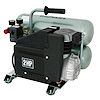
Discussion for the Hitachi EC12 Portable Electric 2HP Oil Lubricated Air Compressor
I have a Hitachi air compressor that builds pressure up to 120 psi or so. The compressor shuts off and the safety valve starts dumping pressure and it doesn't shut off until the compressor kicks back in. It just started doing this recently. Do I need to replace the safety valve or is it it something else? Any suggestions much appreciated!
My EC12 powers all the way up until it pressure releases and then starts to build pressure again. It keeps doing it until it finally stalls and blows a breaker. Is this a pressure switch?
My ec12 powers all the way up until it pressure releases (shuts off) and the safety valve blows. It then starts to build pressure again and then repeats the process. Sometimes I snap the ring on the safety valve and it will hold the air.
never run your ec12 on an extension cord. I have 10 years experience repairing tools and own an ec12 pump mounted on emglo tanks. mine has never had a problem.
My compressor calls for an air compressor, synthetic oil, SAE 5W50.
Does it have to be non detergent type or not? I have some Ingersol Rand synthetic oil for compressors. Will that work? It is W30.
I've had this compressor for a while. A year ago the thermal protection switch broke. I left it unattended and finally got around it and bought a replacement part for it. I received the part and installed it. Now every time I connect it directly to my 15 AMP circuit (with nothing else hooked up there) it flips the breaker. It looks like the fan for the motor wants to spin but then dies. I cannot get it to run. What Can I do?
My compressor will start sometimes and and some times not.
When it starts it will run until the tanks are filled. When more air is needed, usually it will try to start but fail.
I'm pretty sure it has something to do with the oil.
The oil spilled from it when I loaned it out and since I refilled it, I have problems with it. Is it worth saving?
Since the motor starts sometimes, it isn't seized up from lack of oil.
Very cold outdoor conditions can cause hard starting for any compressor as can operating it on a long extention cord, or a combination of the two. Those are easy to check out. Keep the compressor in a heated house or room overnight to fully warm it up, and plug it directly into the outlet.
If the cold weather is your problem, usually after running the motor for a few minutes the compressor is good-to-go for the rest of the day. So if it has been in your truck or at an unheated job site overnight and it won't go due to being cold, bleed down all the pressure, plug it directly into the outlet and cycle it a couple of tank-fulls to warm it up.
If the cold weather or long extension cords are not your problem, next check the operation of the "Non-return Valve" and the "Compressor Pressure Relief Valve."
The Compressor Pressure Relief Valve is on the back of the pressure switch. It is a small diameter brass cylinder and connects over to the non-return valve by a small diameter tube. It isn't shown on the parts lists either here or in the manual that came with the compressor. Someone said they found a call-out for it at the Hitachi site, but I haven't been able to find that myself. If you take this Compressor Pressure Relief Valve off to check it or clean it, be aware there is a small diameter brass plunger which actuates it that can fall out of the back of the Pressure Switch. Don't loose it and make sure it is properly back in place when you reassemble things.
When the compressor reaches its shut off point, the small plunger inside the Pressure Switch actuates the Compressor Pressure Relief Valve and you should hear a momentary hiss of escaping air. This is releasing the pressure on the compressor side of the Non-return Valve so the motor can restart easily without having to overcome high back-pressure from the storage tank.
If you get that momentary hiss, the Non-return Valve and the Compressor Pressure Relief Valve are working correctly. In that case check your capacitors.
If you don't get that hiss, or if the motor won't start at all, try this test:
First unplug the compressor. Then crack open (crack only, don't remove) the flare nut on the copper tube on the inlet side of the non-return valve to bleed off any pressure. If the compressor has been sitting a while, or if the Compressor Pressure Relief Valve is working correctly, no air will come out; but if the Non-return Valve is sticky, and there is still some air in the storage tank, this might drain the entire tank.
Re-tighten the flare nut after all the pressure is fully released. If the compressor will then start and run your problem is probably with the Non-return Valve and/or the Compressor Pressure Relief valve. Listen for the momentary hiss when it reaches shut off pressure to confirm operation of the Compressor Pressure Relief Valve.
A related problem is one where the Non-return Valve sticks.
In this situation when the compressor reaches shut off pressure the Pressure Switch actuates the Compressor Pressure Relief Valve, but since the Non-Return valve is stuck open the air continues to escape through the Compressor Pressure Relief Valve. This causes bleeding down of the tank pressure until a point just before where the motor is about to be turned on again, at which stage the Pressure Switch's internal actuator shuts the Compressor Pressure Relief Valve.
My unit pumps up to 120psi. I know that there is air in the tanks from using the pressure release valve. The trouble is I get no air into my hose from the coupler. I replaced the coupler and still nothing. Help
My compressor started blowing oil through the tanks and hoses. So I tore it apart to check the cylinder and seals. The seals are great, the piston and rings are great, but there was a wear spot on the cylinder wall. Upon further inspection, the rod and counter weight had huge grooves in them and were very sloppy. SO, my question is: how does the counter weight come off?
I am a repair shop. this tool (EC12 Air compressor) through a rod and the motor pump is old and not much good . Can we get the motor pump and install in back on the tank rack. I mean buy it as one unit instead of parts. What would be the part # for something like that?
I have all but given up on the compressor. Other who have purchased this compressor here seem to have the same problem, including some on this forum.
Ran perfect for about 51 weeks after purchase.
Then it started to shut off at different pressures.
Sometimes it will go to 120psi, others times it will drain down to almost zero and then start up and turn off at 30, 50 or what ever pressure. It was not consistent at all with the off and on psi settings. Many times it would just shut off and no head pressure release. It would try a restart and stall.
I purchased a new pressure switch. No change. Was told it was possibly the capacitors. Changed them. By now the repair cost was getting to the point of "you got to be kidding"
It now sits in the garage while I decide to toss or use as a boat anchor, oil removed first of course?
A Hitachi repair shop here had numerous ones in the shop with the same problem. I was told they had no idea or solution for it.
Oil was changed religiously.
I noticed that at Home Depot it wasn't available awhile back. Now it is being offered again.
Does anyone know if the "problem" was fixed or not.
This has to be a PR nightmare for Hitachi.
I got this as a package with the nail gun.
One thing that got me really upset was when the using it and doing finish brad finish nailing, pressure had dropped and not restarted. Had to replace the trim piece.
Any ideas?
I would suspect the problem to be the start capacitor. The capacitor gives the motor a brief jolt of power to start it turning. The capacitor is part #881-515 and is available from http://www.ereplacementparts.com.
I would check the the start capacitor. The capacitor gives the motor a brief jolt of power to start it turning. The capacitor is part #881-515 and is available from http://www.ereplacementparts.com.
I can think of many problems that could cause what you are experiencing.
Are your using a long, small gauge extension cord? Too long and too small of a cord will starve a motor of the power it needs to run properly.
Check the oil level. If the oil is too low the piston can seize to the cylinder. Too much oil can cause excessive pressure in the cylinder, stopping the motor.
There could be a bad bearing. A seized bearing can cause enough resistance to stop the motor.
There are a couple of capacitors on the motor. At least one of them will be used to help start the motor. A motor shop can test them to see if they are both working properly.
Those are the most likely causes. You will need to do some testing to figure out which is causing your problem.
I hope this helps with your repair!
-Mark
Reply: Hard Start
Marty
I've dealt with this problem since I bought it new 3 years ago. After changing the wiring to 12g and still having starting issues, I finally concluded that the oil may be the problem because it only does it in cold weather. I changed the oil but went with an AMSOIL synthetic (as recommended) but a lighter weight of 5w30. End of years of cold weather starting issues.
I need to get a new pressure switch for my compressor and I have the turn switch and not the push button one. Can I still get the switch one? Also this is the only problem with this compressor that I have ever had...besides not starting very well in the cold. I had the screws in the pressure switch go bad and they arched together...hence the reason why I need a new one. Thanks
Brandon
The pressure switch is one part that the manufacture purchases from a 3rd party. Because of this you will see different looking switches on the same model of compressor. As long as you have verified the model number of your compressor when you looked up this breakdown you should get the proper switch. For the model EC12 compressor the pressure switch is part #882-609 and is available from http://ereplacementparts.com.
It cuts off at 120psi, but the small pressure sensing valve on the back of the pressure switch immediately opens causing the tank to leak down. The small line coming from the non return valve plugs into the back of the pressure switch. Is this a pressure switch problem, or is the non return valve causing this?
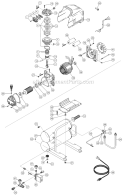
Hi MJ, If I understand correctly the safety valve, item #64 on the parts diagram, is opening at 120lbs and not shutting until the tank is drained. If that is the case you most likely have a bad safety valve, part #881-493 which is available from http://www.ereplacementparts.com. The non-return valve is basically a check valve that prohibits the flow of air from the tank back to the cylinder. I hope this helps! -Mark
Reply: Pressure Release
PeterB26
I am having the same problem with mine. It IS NOT the saftey valve, item #64, though it is acting like one. The offending part is not shown on either the http://ereplacementparts.com parts diagram or the original literature that I still have for my compressor.
It is located at the back of the pressure switch and looks like a skinny brass cylinder. The black tube brings high pressure air over from the non-return valve and enters the back of the pressure switch through this gizmo.
Is it part of the pressure switch assembly or a separate part? I don't know... but it definitely doesn't show up as part of the "tube," Item #52, p/n 881-675
Did you solve this riddle, MJ? Anyone?
Thanks
PeterB26
Reply: Pressure Release
Jim
PeterB26 is correct. The part that is causing the problem is a compressor pressure relief valve. is it sown on the Hitachi web site part breakdown.
I am having the same problem.
Reply: Pressure Release
kyle
That piece you are talking about comes on the new pressure switch however I have the same problem so I replaced the pressure switch and it made no difference at all its still doing the same thing.
Reply: Pressure Release
DS
Well I have the same problem and found the diagram on the Canadian Hitachi site shows the part at the end of the hose but they call it a "joint" well it is more than a joint, it has a hole in it and as soon as the compressor fills it trips something that lets the air out the "joint". I have searched the internet and seen many people with the same problem but no real solutions... ANCHOR!
Reply: Pressure Release
PeterB26
This particular thing (compressor pressure relief valve) is actuated by a small brass plunger within the back of the pressure switch. When it is operating correctly it will give a momentary hiss or spit at the end of the pump-up cycle just as the compressor shuts off. That in turn seems to operate the non-return valve. It also releases the pressure on the compressor pump side of that check valve which is necessary for the compressor to be able to re-start.
I took mine off the back of my pressure switch, (there is a single socket head set screw that holds it in place,) and soaked it for a couple of days in some CRC penetrating oil. Then I put it back on the compressor.
Then I experienced an issue where the compressor wouldn't re-start. It would start from scratch, but after the tanks drained down it wouldn't cycle.
I mistakenly and unnecessarily replaced the capacitors at that point. Still the compressor wouldn't re-start, even if I bled the tank all the way down. But it would start with the tanks partially up to pressure if it sat long enough.
At that stage I was reluctant to throw any more money at this problem without knowing if I was going to get a proper fix, so I bought a new compressor.
Lately I went back to mess with this problem to see if I could identify a solution before trashing the whole machine. That is when I discovered that this relief valve actually releases the pressure on the pump allowing it to re-start. With some further tinkering I discovered the plunger that actuates it inside the back of the pressure switch.
When I removed the "compressor pressure relief valve" this time and manually cycled the spring contact arms inside the pressure switch (the unit was unplugged from the power of course) the brass plunger shot out onto the floor. AH-HA!
I slipped the plunger back into place inside the pressure relief valve and reinstalled the whole thing into the back of the pressure switch.
The first time the compressor pumped up the pressure relief valve did the bleed down thing again, so it seemed like I was back to the original problem. But after two or three cycles it began working properly.
Apparently the pressure relief valve is subject to getting sticky with dirt or some other sort of corrosion or contaminates.
If you are having difficulty with this item, or if your Hitachi compressor is having trouble starting, try the above fix first.
I wish I had known about it. It could have saved me the price of the capacitors and the cost of a new compressor.
Also: it doesn't appear to come apart easily from the tube that runs over to the non-return valve. If you have to get a new compressor pressure relief valve you might want to order a new tube to go with it.
PeterB26
Reply: Pressure Release
PeterB26
This problem is NOT the with the Compressor Pressure Relief Valve where the air is leaking out... it is caused by the non return valve not functioning properly.
The Compressor Pressure relief valve is mechanically actuated by a plunger inside the pressure switch assembly. It is supposed to give a momentary hiss just as the compressor shuts off. If the non-return valve is operating properly this relieves the pressure on the compressor side of that valve so it can re-start without having to work against high pressure.
If the non-return valve isn't working and doesn't stop the back-flow of air from the tank, the tank will continue to empty through the Compressor Pressure Relief Valve until the pressure switch's internal mechanical actuator allows it to close. In other words until the tank pressure is almost all the way down to the point where the pressure switch is about to turn the motor on again.
I suspect a sticky non-return valve may also be the cause of some of the hard-start issues others have experienced. If you are experiencing a hard start, even when the compressor is relatively warm and you ARE NOT USING an extension cord, you can try two things to test it out.
First test: if the compressor actually starts and fills the tank, listen for a momentary hiss just as it shuts off. If that happens the non return valve and the compressor pressure relief valve are doing what they are supposed to do. In that case check your capacitors.
If you get a prolonged hissing and pressure bleed down just when the motor stops the Non Return Valve is stuck. The Compressor Pressure Relief Valve where the air is coming out is NOT the problem, but rather the Non-Return Valve.
If you get no hiss at all either the mechanical actuator inside the pressure switch is not functioning, or the compressor pressure relief valve is not functioning. Either way the compressor won't easily re-start because it has to work against the air pressure in the tank
Second test: If your compressor won't start at all try this approach: try cracking (just crack, don't totally remove) the flare nut on the copper line which is on the inlet side of the non-return valve and let all the back pressure bleed out. If the non-return valve is working, or the unit has been sitting awhile there may not be any pressure there to escape at all. But if the non-return valve is sticky, cracking this fitting open may or may not bleed the entire storage tank. Re-tighten the flare nut when the air stops escaping. If the compressor motor then starts and runs, your problem may lie with the non-return valve and/or the compressor pressure relief valve. Confirm their proper operation by listening for the short hiss as the motor shuts off.
This is an update to a post I wrote yesterday on how I fixed my problem. It didn't dawn on me until after I submitted that post that the problem has to be in the Non-Return Valve, not the Compressor Pressure Relief Valve.
I hope this information is helpful to someone.
PeterB26
Reply: Pressure Release
PeterB26
If you have the problem where the machine pumps up to pressure, then bleeds back down again through the valve on the back of the pressure switch and recycles;
OR if your compressor pumps up from empty to pressure, but then won't restart;
check your non-return valve first.
For the older compressors this is part number 881-581 and can be properly identified by the following configuration:
Outlet: (tank side) FEMALE PIPE THREAD !!
Inlet: (compressor side) Male flare fitting
Pressure Switch tube : Male compression fitting
For newer compressors this is pat number 160-591 and is identified as follows;
Outlet (tank side) MALE PIPE THREAD !!
Inlet (compressor side) male flare fitting
Pressure switch tube: male compression fitting
I had the older one. I ordered a replacement valve, but in the meantime I took the cover off the broken one. I don't know if this is possible with the newer style valve. I discovered that the rubber stopper within was swollen and didn't move freely in the valve housing.
The problem is that the rubber stopper absorbs moisture and/or any solvents in the compressed air if the machine is left without draining for long periods of time. ( I am bad about doing this as I am usually working in a finished house and there is no simple clean way to drain the compressor without dragging it outside. So I tend to ignore that recommended procedure until the end of the job. My bad.)
I fixed mine by popping the top off the non-return valve; wiping the rubber stopper down with a bit of mild solvent (paint thinner or alcohol will do) and then placing it on a sunny and warm window sill for two days while I awaited the arrival of the new part.
The swollen stopper out-gassed all the absorbed moisture and returned to its original size. After re-installing it the compressor works fine.
A thread further down suggests sanding the diameter of the stopper down. That would work too and I see very little downside to doing so. Just be careful and clean the stopper well before reinstalling so as not to introduce any tiny rubber particles in to the air stream and your tools.
I stashed the new part in my spares bin (Along with the two new but totally unnecessary capacitors) for emergency use in the future.
Bottom line is that if you have this problem you can probably fix it yourself faster than you can source the replacement parts. AND you can probably avoid it in the future by being good about draining the tanks nightly.
I hope this saves some people the expensive "learning curve" I had to go through!
PeterB26
Reply: Pressure Release
PeteT
PeteB26 is 100% correct. After suffering with the bleed down problem since I owned the EC 12 I found this web site and followed the directions given and fixed the problem immediately. I had some problem identifying the non-return valve as it is not shown on the diagram and I originally thought it was the fitting at the end of the flex hose by the switch box (which does have a little brass plunger in it, so if you detach it be sure to put that back in place). It is actually the fitting at the other end of the flex hose attached to the tanks. After getting this figured out, I removed the valve and found it full of rusty water, which I dried up and then lubed the housing and the rubber stopper that seats to block the air flow, and voila! When I re-assembled the thing the compressor worked perfectly. I highly recommend WD-40 for the lube as it is made to specifically get water off things. Hope this helps someone else.
With next to no hrs. on this machine the non return valve caused the machine to go in for repairs. The same problem has returned soon after the repair. The repair shop was listed as a qualified Hatichi repair outlet. This defect renders the machine useless.
I have read all the posts and it got me thinking, my Hitachy EC 12 also was doing the same thing as going to the top of the pressure limit shut off and then start draining air and then when it tried to start it just hummed. Well with fine grit sand paper I fixed mine and it runs great now.
First make sure there is no pressure and it is unplugged. (1)Now take the top nut off of the Non-return valve, it is the one on the tank connected to the black tubing.
(2) There will be a black Rubber #15 on the picture above and a spring inside the nut. remove the rubber without stretching the spring.
(3) Now this is where the sandpaper comes in, place some very fine sand paper on a flat surface, I used 240 grit, very softly roll the sides on the sandpaper and remove some of the sides to make the rubber smaller in size. Keep checking it by putting it back in the nut on top of the spring and see if it moves in and out freely. When I pulled mine out it was as if the rubber #15 was too tight. When I was happy that it went in and out freely I put it back in and it worked great. Hope this helped it did for me.
Reply: Hitachi - EC12
Texomajoe
I think the little italian who assembled the switch, put the #15 rubber part in upside down. After I removed the non-return valve top, mine was sticking also, but when you examine how the #15 should fit on the tube seat, turning it over stopped all of my problems without having to sand it. The machine works perfectly now.
Everyone that i know that owns one of these has the same problems in less than a year. It will either try to run, run real slow, then stop with a hiss; or will run well then stop at random pressures. I took mine to a factory service guy here and he said it worked fine for him, but I plug it in and on the 2nd or 3rd fill up it shuts down. One good friend of mine got his fixed and it happened again, he asked me if i wanted it and laughed at me for taking mine in. I would not buy one unless you know a service guy really well.Also the guys that posted before with good reviews are very lucky in my opinion
this compressor is a die hard I ran it out of oil I spelt it get hot and shut down I put oil it and ten minutes later I was back in business with no damage done to this little work horse .